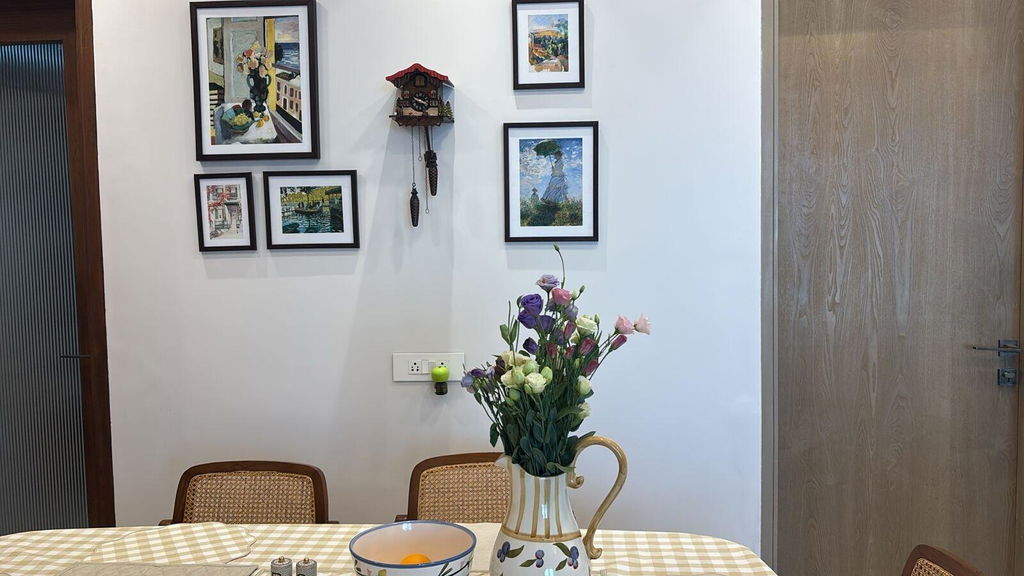
How to Arrange Multiple Pieces of Wall Art | Wall Art Hanging Guide
Learning how to arrange multiple pieces of wall art is easier than it looks.
You get back a lovely set of frames, place one against the wall, and all is out of place. Too high, too spread out, too dense. It occurs to everyone, and that is why there are so many "accidental" walls. We have assisted homeowners, owners of cafes and designers in this very scenario at the Bombay Home Decor Co.
In this guide, I'm going to show you about spacing, layout, height, and a few common wall art mistakes so you can hang wall art with 100% confidence.
Why the Right Wall Art Arrangement Makes a Difference
Most people feel that hanging art involves the issue of taste. That is true to some extent, but the true key to good arrangement is good visual balance. The eye goes through the wall as it does through a page; it looks for a starting point, a clear shape and a sense of rest. The room is unsettled and agitated when the pieces are hung without order, despite their beauty.
Here is the practical design thinking behind an ideal arrangement:
- Visual weight: That is, heavy, large or well-framed items are “heavier” than light, small ones—this is visual weight. Distribute the load so that one side of the wall doesn't appear to be settling.
- A clear outline: A group of frames should be a single shape, for example a rectangle or a column or a row. Conceptualize it in terms of one large composition from a number of different pieces.
- Repetition: Repeating a colour, frame finish, or a margin provides the eye with something to hold on to.
- Breathing room: An empty wall around the group counts as breathing room. It frames the art.
Once you grasp these four premises, it becomes a non-guesswork concept to know how to arrange art on a wall. It turns into a matter of decisions.

Choose the Right Wall for Multiple Art Pieces
Before choosing a layout, choose your wall, because where you arrange multiple pieces of wall art is equally important to their hanging. An ideal wall would be one that everyone looks at, like one above the sofa, one behind the bed, one by the stairs, one by the dining table, or one that faces the entryway.
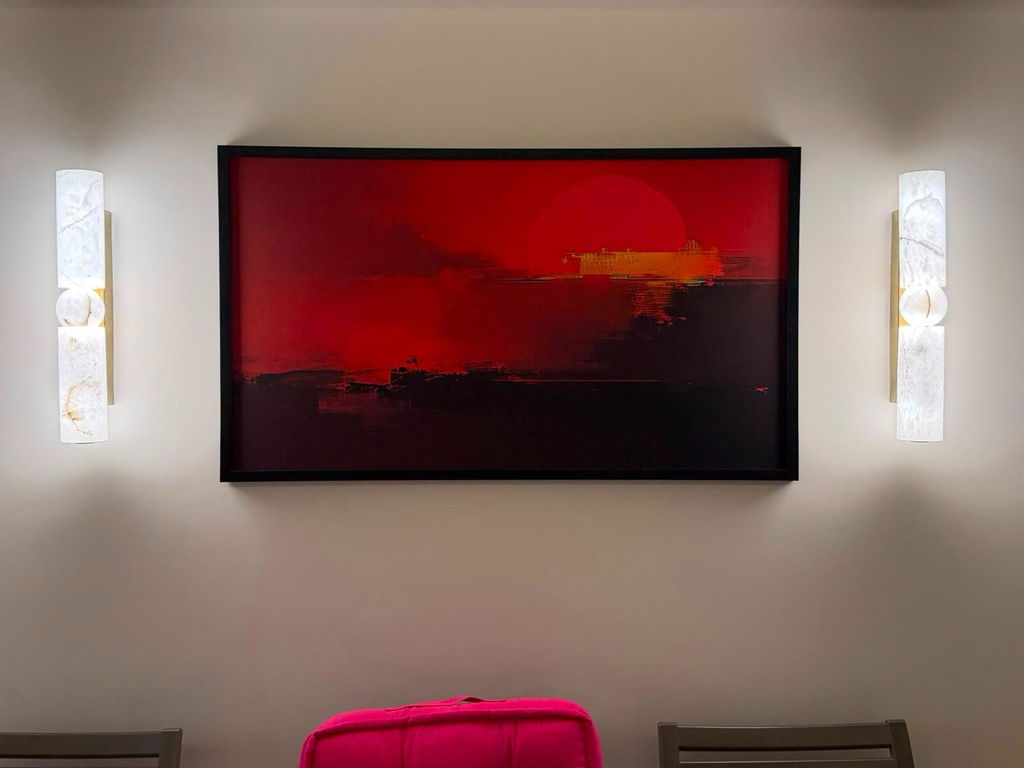
The number one rule is this: The width and place of your arrangement are determined by the furniture below the piece of art. When painted art "stands alone," it is looked down upon. Art that is attached to a piece of furniture is purposeful.
- Above a sofa or console: Make the group about two-thirds to three-quarters of the sofa or console's width. When using a sofa, a group of approximately 130 – 150 cm width will be appropriate for a 200 cm sofa.
- Above a bed: Keep the group slightly narrower than the headboard, and centred on the bed rather than the wall.
- Above a sideboard or dining buffet: Centre the group around the furniture, not the closest window or door.
- Empty wall with no furniture: Place the group in the middle of the wall, or a high vertical layout to give it some height.
Look for light switches, vents, curtain rods and door swings as well. Too many obstacles is best on a single wall statement piece.
How Many Pieces of Wall Art Should You Hang Together?
There is no magic number, but there are sensible starting points:
- 2 pieces: Simple, calm and modern. It is an ideal choice for narrow walls, side tables or bedrooms.
- 3 pieces: The most reliable. Triptychs are popular because they look good on the eye, and that's where odd numbers come in.
- 4 to 6 pieces: Ideal for a grid or a nice line above a sofa or a dining space.
- 7 or more: It is perfectly fine to display 7 or more in a gallery wall, except the wall needs to be large enough and you have to plan ahead.
It's not the other way around, your wall determines how many. With 8 frames, this is a small wall that feels crowded. Without a few items and/or a small frame, a large wall looks empty. If you choose to do so, aim to work with three and build up if the wall is not yet finished.

7 Ways to Arrange Multiple Pieces of Wall Art
Here are seven proven layouts. For each one, I have noted where it works best and the mistake to avoid.
1. Symmetrical Grid
Frames, available in rows and columns of even numbers (2x2, 3x3), are hung in a regular pattern. Clean and well organized – very straightforward.
- Works best in: Offices, dining rooms, formal living rooms and hallways.
- Mistake to avoid: Uneven gaps. In a grid, even a few millimetres of difference shows immediately. Use a spirit level and a paper template.
- The pitfall to fall into is that gaps are not even. Even a few millimetres of difference are apparent in a grid. Make use of a spirit level and a paper template.
2. Horizontal Row
Three to five frames hung side by side in a single line. This is the go-to for long walls.
- Works best in: Above sofas, beds, sideboards and café banquette seating.
- Mistake to avoid: Making the row wider than the furniture below. Let it be a reasonable length, preferably shorter than the sofa or bed.
3. Vertical Arrangement
The frames that are put together one over the other. This arrangement will make ceilings look higher and direct the eye upwards.
- Works best in: Narrow walls, stairways, entryways and the space beside a door or window.
- Mistake to avoid: Setting the column too high, and/or having the bottom frame way up off the floor from furniture. Throw some weights to something.
4. Gallery Wall
Many frames – various sizes, all mounted together as a single composition. It's expressive, personal and is a popular choice for stairwells and living rooms.
- Works best in: Large living rooms, staircases, family spaces and creative studios.
- Mistake to avoid: Hanging frames directly on the wall without considering them. Place everything on the floor first or cutting paper out and taping them up.
5. Triptych Arrangement
One picture divided into 3 panels or three identical pictures as a group. The overall reaction is one of tranquility, evenness and refinement.
- Works best in: Bedrooms, living rooms above any sofa or Reception Areas.
- Mistake to avoid: Install panels too far apart. If there is too much of a gap, the image is not recognized as a single image.
6. Large + Small Artwork Combination
Side or under one large piece is the anchor, and one or two smaller pieces are located there. This will provide a sense of emphasis and hierarchy.
- Works best in: Medium rooms, dining areas and walls with an offset window or door.
- Mistake to avoid: Making the little pieces too small. They should be less like supporting characters and more like characters.
7. Eclectic Gallery Layout
Several types of frames come in different shapes, designs, shades and even items like mirrors or woven frames. It has a casual quality of being gathered over the years and has character.
- Works best in: Cafes, creative offices, boho homes and rooms that are layered.
- Mistake to avoid: Having no common thread. Use one of the repeating colours, the same spacing or the same level tone for the frame.

How Much Space Should Be Between Wall Art Pieces?
This is where most self-made arrangements fail. The basic principle is to maintain the same distance all the time.
- For most rooms: 5 to 8 cm (2 to 3 inches) is left between the frames.
- For large pieces: If the pieces are large, then it can be stretched up to 8 – 10 cm, but each gap must be the same length.
- For small, delicate frames: move closer, about 3 – 5cm, so that the group forms a whole.
Too large a gap between the pieces makes them appear separate. They are too tight otherwise it feels cramped (a wall feels cramped if they are too tight). Choose one measurement and take it throughout. Make a cardboard piece to the desired measurement of the gap that you want, and insert it in between each frame when hanging it.
How High Should Multiple Wall Art Pieces Be Hung?
There's one rule I can share that I find most helpful: think of multiple pieces as a single piece of art work, rather than as multiple art frames.
This will be the height of the entire group, rather than the height of every single frame.
- Centre of the group at eye level: Try to position it about 145-150 cm (57-60 inches) from the floor up to the centre of the whole setup.
- Above furniture: 15-25 cm (6-10 inches) between the bottom edge of the lowest frame and the top of the furniture.
- In dining rooms and cafes: Slightly lower due to sitting – centre will be around 130 to 140 cm.
- On staircases: Keep the same distance from the edge of stairs to each frame and follow the stairs along the angle of the stairs.
Take a step back when in doubt. If you need to view the art, it is too high. This is the most frequently made error that we notice.
How to Match Wall Art With Your Room
Good arrangements also rely on the selection of art for the appropriate room. Please follow this quick guide:
|
Room
|
Best Layout
|
Style and Colour Tips
|
|
Living room
|
Horizontal row, gallery wall, large + small
|
Pull two or three colours from your sofa, cushions or rug
|
|
Bedroom
|
Triptych, 2-piece set, vertical pair | Soft, calming tones and gentle textures |
|
Dining area
|
Grid or horizontal row | Food, botanical or abstract art; hang slightly lower |
|
Home office
|
Symmetrical grid, large + small | Clean lines, motivating themes, neutral palettes |
|
Cafe
|
Eclectic gallery, horizontal row | Bold colours, local flavour and strong brand mood |
|
Entryway or hallway
|
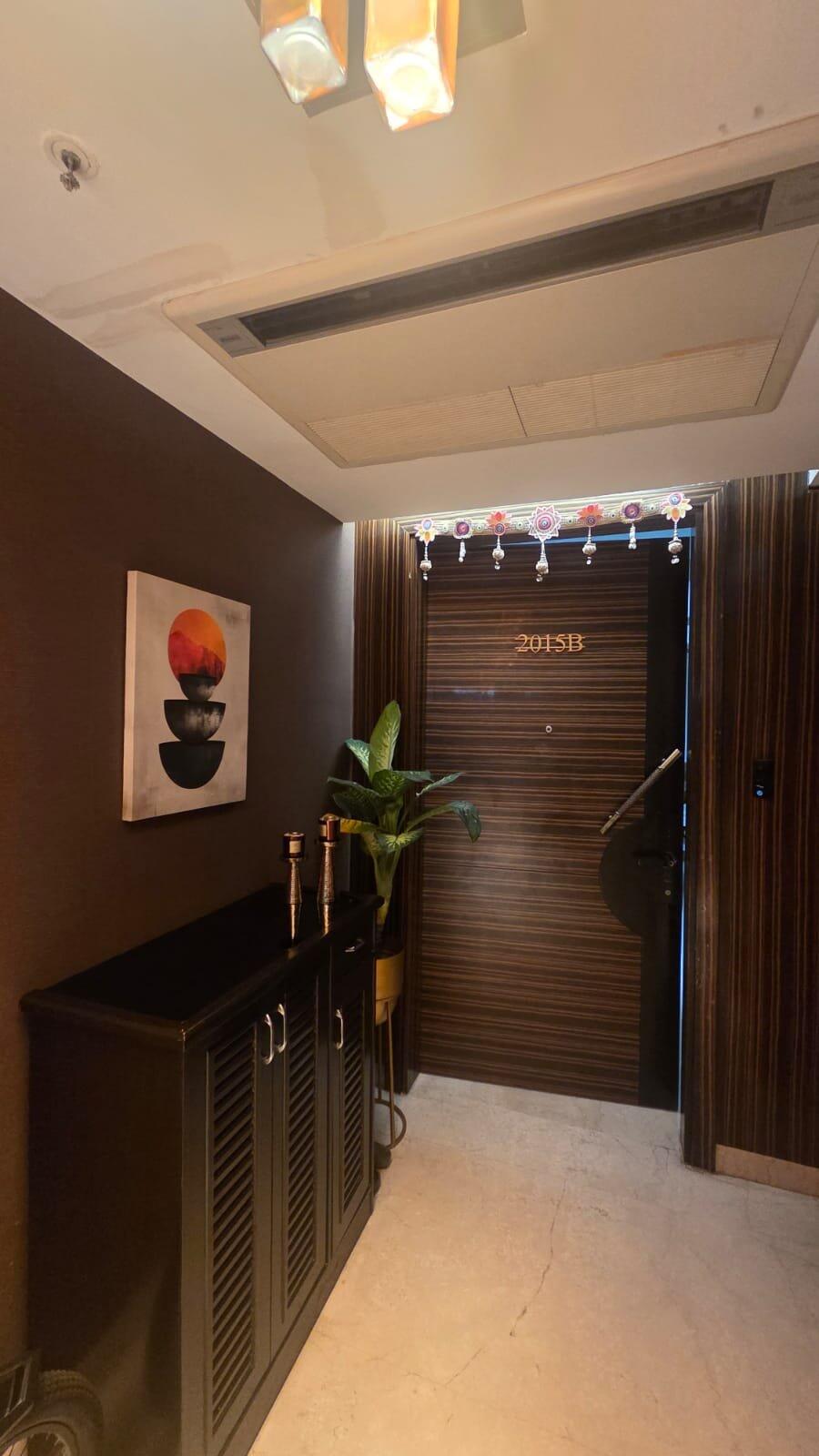
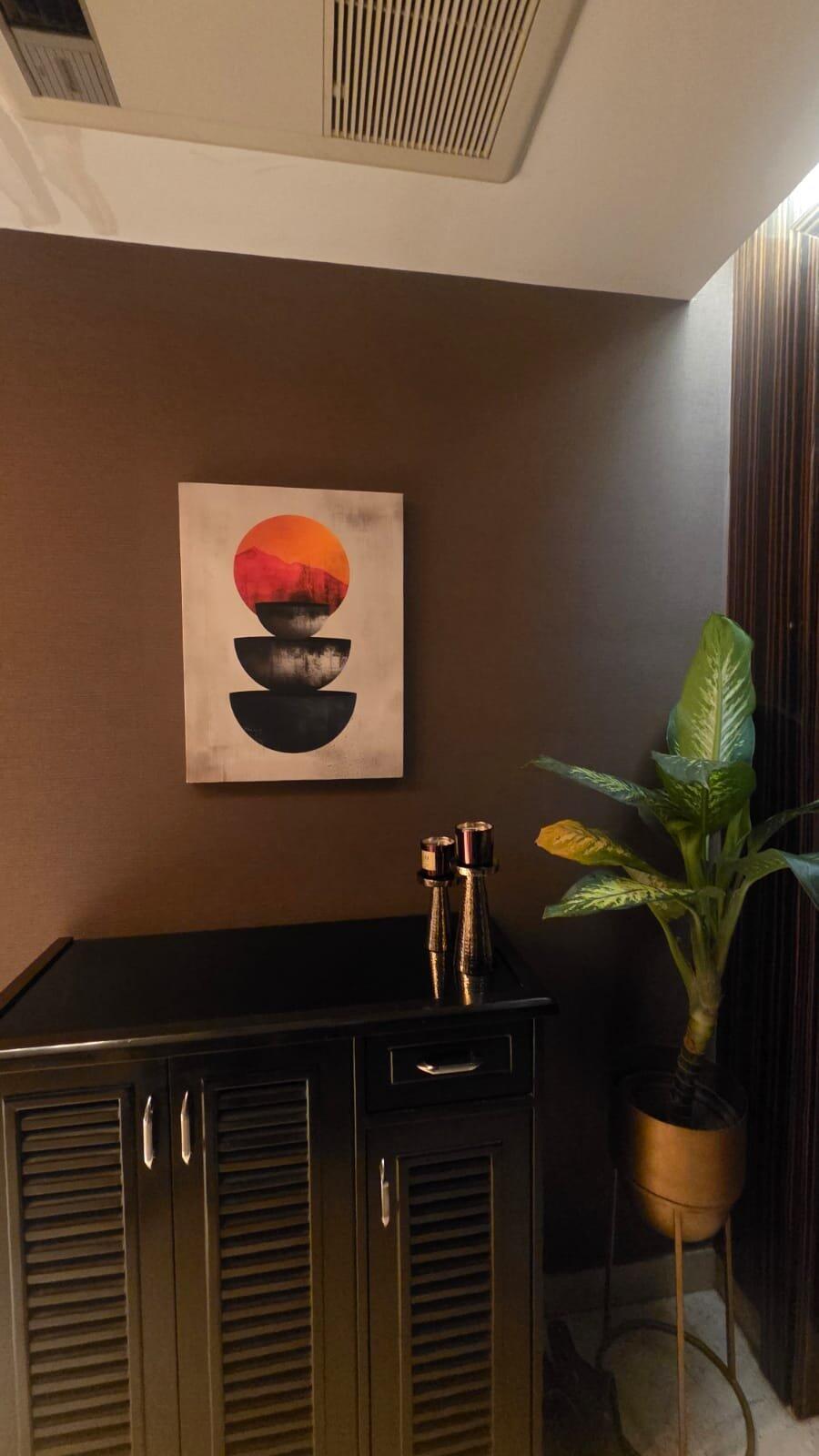
Vertical arrangement, narrow gallery | Warm, welcoming pieces that set the tone |
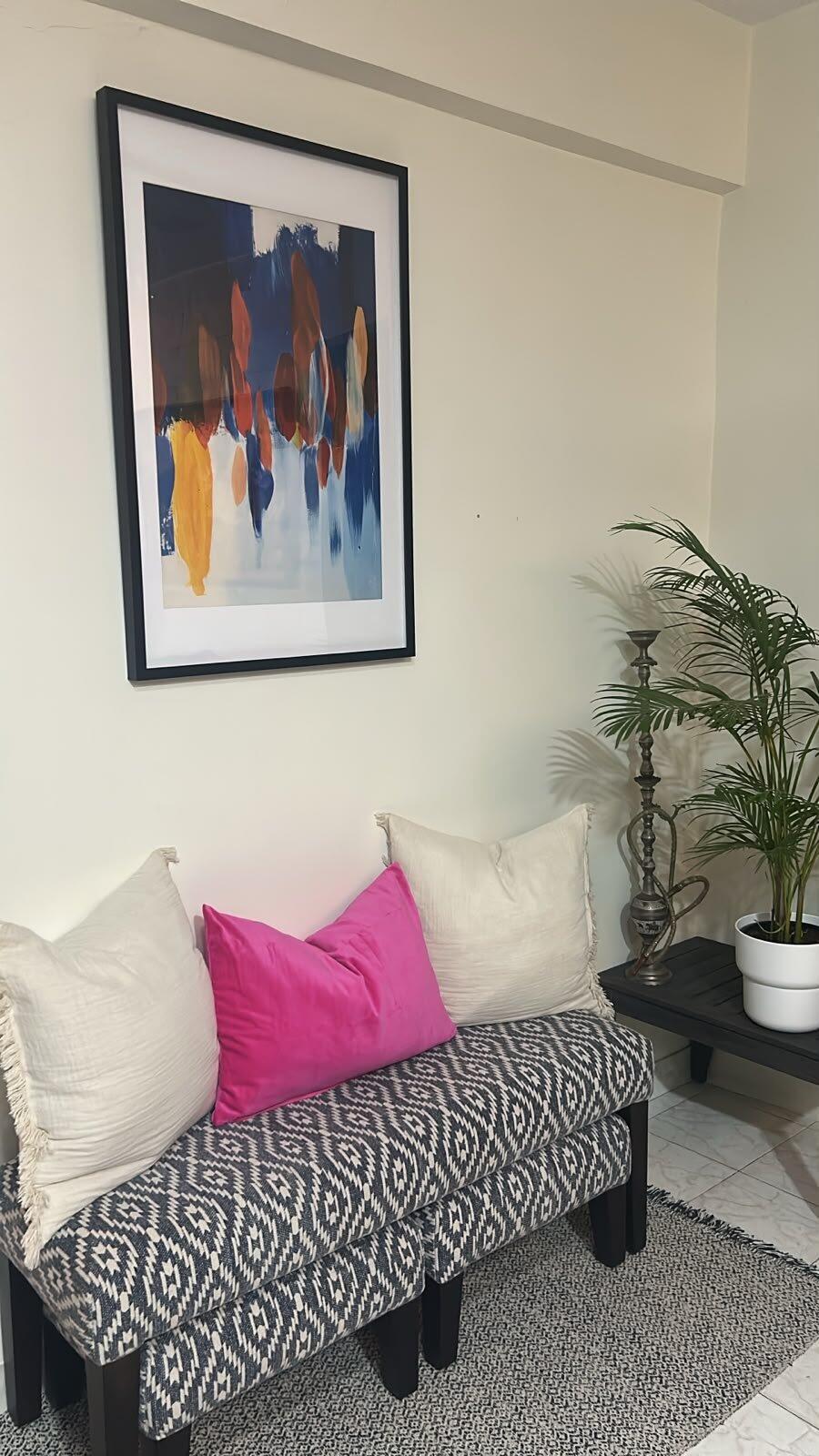
Matching art with your furniture and walls: The art is not required to perfectly match the color of the sofa. It should have some relation to the piece. Either use the one color scheme in the room or contrast colors that look purposeful. When it comes to choosing the colors of your interior walls, you have the freedom to do so when they are white or light. If there's a patterned or deep wall, go for simpler pieces and lighter frames to avoid the pieces getting lost.
Matching art with your room's style: Modern spaces go well with clean prints and thin frames. Rich colors and elaborate frames are best in traditional rooms. The textures can be layered in boho and eclectic rooms. Otherwise, try to stick to the mood of your strongest furniture piece.

7 Common Mistakes to Avoid When Arranging Wall Art
These are the most common issues we encounter when having more than one piece of wall art and simple solutions for each.
1. Hanging artwork too high: The central position of the group should be close to eye level and not close to the ceiling. Fix: bring the group down so that it meets the furniture below.
2. Leaving inconsistent gaps: Even if it is a great work of art, but the spacing isn't even, it looks like it has been careless. Fix: Select one gap size and select a cardboard spacer.
3. Using pieces that are too small for the wall: The smaller frames on a larger wall look dispersed. Fix: add larger pieces or stack multiple small ones together and snugly.
4. Making every frame identical without a reason: When a room is unadorned with other elements, matching sets can be an underwhelming way to add variety. Fix: alter the size, or use a clear pattern for a clear purpose.
5. Mixing too many unrelated styles: Neon abstract and a vintage map will be too much with the realistic portrait. Fix – maintain a common colour, theme or frame finish.
6. Ignoring furniture underneath: If a group isn't centered off the sofa or bed, it appears to be an accident. Fix: always centre on the furniture and not on the wall.
7. Creating visual clutter: Sometimes, more is not always better. Fix: keep space between group and take away anything that is not a worthy addition.
How to Choose Wall Art for a Multi-Piece Arrangement
Picking the right art matters as much as hanging it well. Use these four filters:
- Colour: Pick 2-3 colours for each design. A common colour scheme helps link the works of art.
- Theme: Decide on a story, such as botanical, abstract, travel, typography or black-and-white photography. A theme gives the group meaning.
- Size: Only mix sizes for specific purposes. Try to retain the same sizes for a clean effect. When hanging a gallery wall, mix them up, but use one large anchor piece.
- Room style: Check out what you have. Art should be at home, not in another house.
Tip: Before making a purchase, cut the paper to the size of each frame and put on the wall for a day or two. You will know within a few minutes if the scale is correct or not.

Should You Buy Ready-Made or Custom Wall Art?
Both are good options. The one that's right for you and your wall depends on your timeline.
When you want to jazz up a space or have a gift on hand, you'll find that ready-made wall art is also fast, inexpensive and of course perfect. Sets are typically designed to be used together, so you don't need to figure out the different measurements.
Custom wall art is worth it when:
- Your wall has unusual dimensions.
- You want a specific colour palette to match your interior.
- You are in need of artwork for a decorating project for a cafe or office that you wish to tie to your brand.
- You are giving a personal gift and you are giving away a favourite place, a family name or a special memory.
The good thing about them is that they both hang in the same way. Once you learn how to hang wall art according to the spacing and height instructions above, it becomes easier to position them whether ready made or custom pieces. Don’t know which one to choose? Go for the ready-made first then include the custom piece in the future. Check out wall art for your home, gifts, cafes, and offices at Bombay Home Decor Co.
Wall Art Arrangement Checklist
Here is a list of things to consider before grabbing the hammer
- Take the measurements of the wall and the furniture below the wall.
- Determine group space needed (approximately ⅔ of furniture).
- Select a layout to match the shape of the wall.
- Cut a piece of paper into the shape of a frame and stick it onto the wall.
- Place the centre of the group at 145cm - 150cm from the floor.
- Choose a gap size (5 to 8 cm) and stay consistent.
- Take a spirit level for each frame.
- Try to take a step back and check from across the room.
- Use the right hooks or anchors for the wall type and frame weight.
Conclusion
You have now learned how to display your multiple pieces of wall art. You must select an appropriate wall, relate your display to furniture placement, select an appropriate arrangement for your wall, ensure there is proper spacing, and hang your wall display at eye level. Just do all this and your wall will be properly arranged.
From the flat to the gift, the styling of a café to the completion of a project is all the same. For assistance in selecting coordinating pieces, stop by Bombay Home Decor Co at bombayhomedecorco.com and take a look at the pieces we have.
Frequently Asked Questions
1. How do I choose the right wall art size before buying?
Take a measurement of the wall and furniture underneath it. Approximately 2/3 to 3/4 of the width of furniture should be taken up by the art group. When purchasing, cut paper pieces so you can tape them to the wall before purchase.
2. Should wall art match my furniture or wall colour?
It should be related to them and not identical. Use a similar or a contrasting colour from your room. For busy or dark walls, opt for simpler art.
3. How do you arrange multiple pieces of wall art on one wall?
Decide on a layout, see the group as a single picture, position it in the centre of your furniture, maintain a consistent gap of 5-8 cm between the group and all the furniture, position the centre of the group at eye level (145-150 cm from the floor).
4. Where can I buy wall art online in India?
Wall art for home, gifts, cafes and offices is available at bombayhomedecorco.com at Bombay Home Decor Co. Check for precise dimensions and high quality printing and support.
5. Should I buy one large artwork or a set of smaller pieces?
One big artwork will make a powerful visual impact and is ideal for minimal interiors. A collection of small art pieces adds some dynamics and flexibility and is great for large walls and long furniture.
6. Can I mix different wall art styles and sizes together?
Yes, provided that there is some connection between them, such as color or a similar finish of the frame, spacing, or thematic consistency. Without any connection, mixing styles looks messy.